1. Stop "Training in the Dark"
The biggest mistake many companies make is rolling out e-learning without knowing exactly which gaps they are trying to close. Without a defined competency framework, training becomes random, and you risk employees spending time on courses they don't need while critical skill gaps remain wide open.
A successful strategy requires defining the specific skills and competencies each role demands to get the job done. This is exactly what AlonSkills is designed to solve; it provides the necessary framework so you can hit the target with your initiatives instead of training in the dark.
2. From Course-Focus to Skills-First
In 2025, top-performing organizations are moving away from measuring "completed courses" and starting to measure "acquired skills." Your strategy should be to break down large subjects into concrete skill goals. This makes it easier for employees to see the relevance and for management to see the impact on the bottom line.
3. Use Data to Connect Analysis and Learning
To avoid wasting resources, learning initiatives must be data-driven. By connecting the job requirements you’ve defined with an employee's actual level, you can serve e-learning that is 100% relevant.
This is where the collaboration between systems shows its true strength. Once AlonSkills has mapped exactly which competencies are missing in each department, you can use a platform like AlonLearn to automatically serve the correct learning paths. This ensures that every dollar invested in e-learning goes toward closing a real business need.
4. Efficient Production with AI Authoring Tools
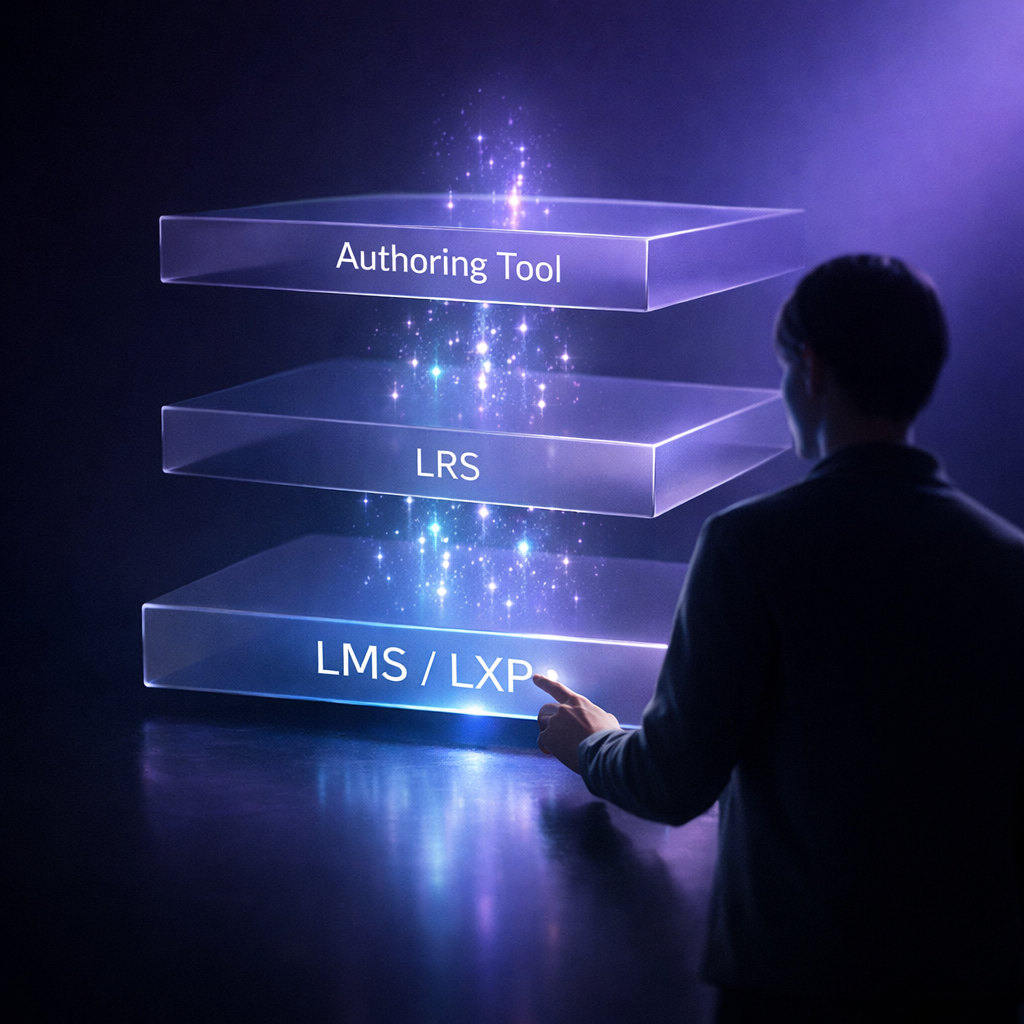
Once a gap is identified, content must be produced or acquired quickly. Using an AI-first authoring tool within your LXP or LMS makes it possible to create tailored content in minutes. Whether you choose to develop your own courses using AI in AlonLearn or purchase an external course when more appropriate, speed and relevance are the keys to success in 2025.
5. Create a Holistic Journey (Blended Learning)
While e-learning is efficient, it works best as part of a larger journey. Combine digital modules with webinars, physical courses, and seminars. By structuring this into one unified learning path—for example, in AlonLearn—you ensure that nothing falls through the cracks and that the certificate of completion reflects the total competency gain once all activities are finished.
Summary
To master e-learning in 2025, you must stop guessing. By using a competency framework as your foundation, you transform training from a passive activity into a strategic tool.
Want to see how AlonSkills and AlonLearn can put your strategy into a system? Contact us for a demonstration.