e-learning

The ADDIE model – does it apply to learning in general or e-learning?

By AlonLearn Team
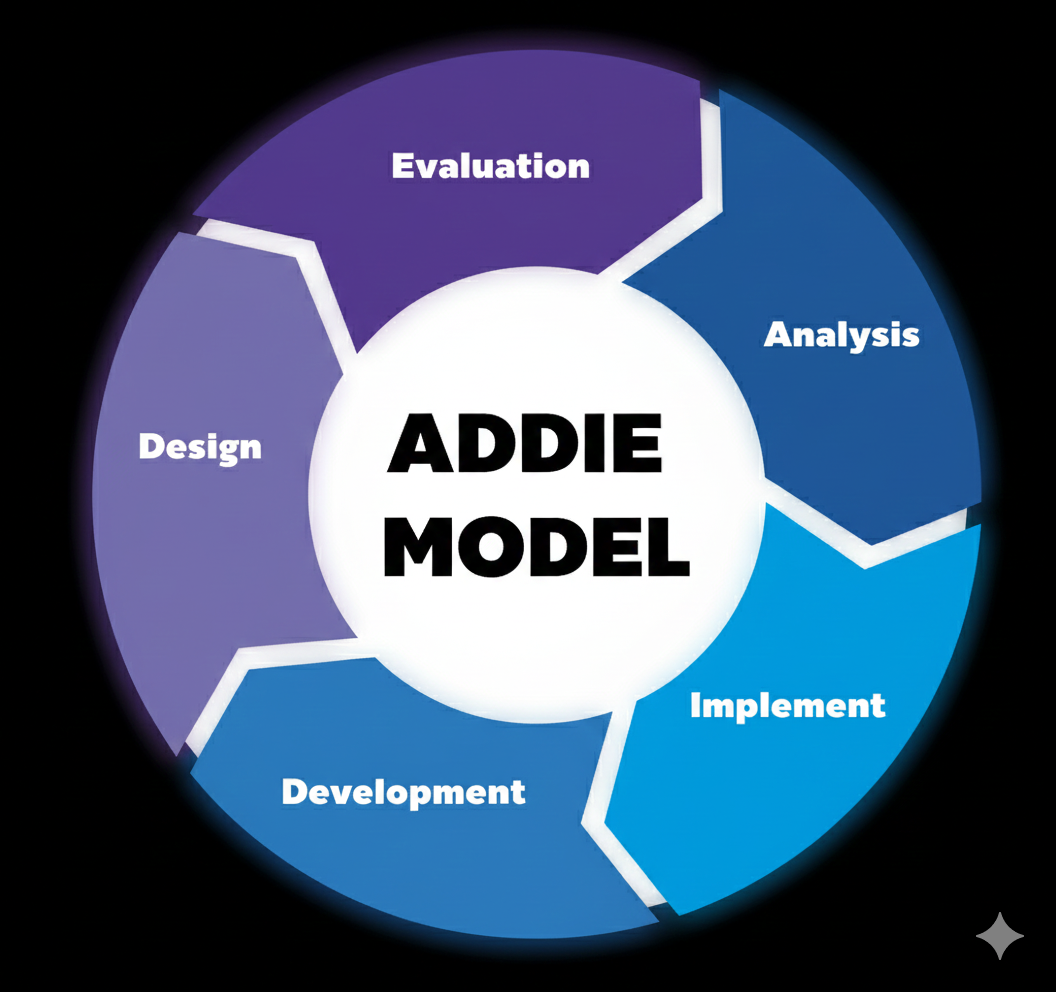
The ADDIE model is the cornerstone of modern instructional design. Whether you are planning traditional classroom training or developing complex e-learning modules, this systematic framework provides a reliable roadmap from initial analysis to final evaluation.
The ADDIE model – does it apply to learning in general or e-learning?

The short answer is: Both. The ADDIE model is a general framework for Instructional Design, meaning it can be used to plan anything from a 15-minute e-learning module to a full university degree or a hands-on carpentry workshop.

However, in modern practice, it is the "bread and butter" of the e-learning industry. Here is why:

1. The Origin (General Learning)

Developed in the 1970s for the U.S. Army, the model was created because the military needed a systematic way to train large numbers of people on complex equipment. At that time, digital e-learning didn't exist; the focus was on classroom instruction, manuals, and physical drills.

2. Why it is the Gold Standard for E-learning

While the model is general, it has become the industry standard for e-learning because digital projects require a very rigid structure.

  • In a physical classroom: A teacher can improvise if students look confused.

  • In e-learning: Everything is "locked in" once the course is published. If you discover a mistake in week 3 of an online course, it is expensive and technically difficult to fix. Therefore, developers follow the ADDIE stages strictly to ensure quality:

Phase

In the Classroom (Example)

In E-learning (Example)

Analyze

What do the students already know?

Which browsers do they use? Do they have speakers?

Design

Creating a lesson outline.

Creating a storyboard (a screen-by-screen plan).

Develop

Printing out worksheets.

Programming interactivity and recording videos.

Implement

Delivering the lecture.

Uploading the course to an LMS and granting access.

Evaluate

Asking: "Did you learn something?"

Analyzing data: Where did users drop out or fail?

The short answer is: Both. The ADDIE model is a general framework for Instructional Design, meaning it can be used to plan anything from a 15-minute e-learning module to a full university degree or a hands-on carpentry workshop.

However, in modern practice, it is the "bread and butter" of the e-learning industry. Here is why:

1. The Origin (General Learning)

Developed in the 1970s for the U.S. Army, the model was created because the military needed a systematic way to train large numbers of people on complex equipment. At that time, digital e-learning didn't exist; the focus was on classroom instruction, manuals, and physical drills.

2. Why it is the Gold Standard for E-learning

While the model is general, it has become the industry standard for e-learning because digital projects require a very rigid structure.

  • In a physical classroom: A teacher can improvise if students look confused.

  • In e-learning: Everything is "locked in" once the course is published. If you discover a mistake in week 3 of an online course, it is expensive and technically difficult to fix. Therefore, developers follow the ADDIE stages strictly to ensure quality:

Phase

In the Classroom (Example)

In E-learning (Example)

Analyze

What do the students already know?

Which browsers do they use? Do they have speakers?

Design

Creating a lesson outline.

Creating a storyboard (a screen-by-screen plan).

Develop

Printing out worksheets.

Programming interactivity and recording videos.

Implement

Delivering the lecture.

Uploading the course to an LMS and granting access.

Evaluate

Asking: "Did you learn something?"

Analyzing data: Where did users drop out or fail?

3. Are there alternatives?

Many modern professionals argue that ADDIE is too "slow and heavy" for the fast-paced world of technology (it is often called a Waterfall model). As a result, many e-learning developers now use more modern versions:

  • SAM (Successive Approximation Model): A more "Agile" model where you create small prototypes and test them early and often, rather than planning everything perfectly before you start building.

Conclusion: Think of ADDIE as a map. You can use it to go for a hike in the woods (general learning) or to build a highway (e-learning), but it is the highway builders who rely on the map most strictly today.

Would you like me to explain the SAM model (the Agile alternative), or perhaps see a checklist for the "Analyze" phase of an e-learning project?

AlonLearn team
Contact Us

Want to Learn More About AlonLearn?

Have questions about how AlonLearn can help your organization? We're here to help you find the best solution for your needs.

More from the blog

Automated Course Administration – Save Time, Gain Control and Increase Revenue
By AlonLearn Team

Automated Course Administration – Save Time, Gain Control and Increase Revenue

Automated course administration means that registration, communication, payment processing, participant follow-up and reporting are handled automatically within one unified system. Instead of managing Excel spreadsheets, sending invoices manually from an accounting system and handling endless back-and-forth emails, the entire process is digitized, structured and streamlined.With AlonLearn, you get a complete solution that combines LMS functionality, course registration and invoicing in one platform. The result is better control, reduced manual workload and a more professional experience for both administrators and participants.

e-learningLMS
The Battle for Intelligence: SaaS Under Pressure and E-Learning Built in Minutes with AI
By AlonLearn Team

The Battle for Intelligence: SaaS Under Pressure and E-Learning Built in Minutes with AI

Fredrick Falck Skogstad from Already On is this week’s guest on the podcast, where we dive straight into how AI is reshaping both the software industry and the way we work. Fredrick teaches AI courses and develops AlonSkills using vibe coding and precise prompt engineering. Rather than relying on a single model, he combines multiple AI tools for different tasks and connects them into structured workflows.

e-learning
The Integration Between Unit4 at DFØ and AlonLearn – Seamless Financial Flow for E-Learning, LMS and Course Registration Systems
By Stig Elsfjordstrand

The Integration Between Unit4 at DFØ and AlonLearn – Seamless Financial Flow for E-Learning, LMS and Course Registration Systems

For government agencies using DFØ as their accounting service provider, integration with Unit4 ERP is not optional — it is a prerequisite. At the same time, modern solutions for e-learning, LMS platforms, and course registration systems require secure data exchange, automated invoicing, and full traceability.

LMS and Registration Systems for the Public Sector – The Requirements You Need to Be Prepared For
By AlonLearn Team

LMS and Registration Systems for the Public Sector – The Requirements You Need to Be Prepared For

Many organizations operate with a separate LMS, a registration system, and often a standalone webinar solution. Individually, they work well. The challenge arises when public sector requirements demand that these systems operate seamlessly together.

e-learningLMS
Lightning Webinar: The Building Blocks of E-Learning You Need to Know
By AlonLearn Team

Lightning Webinar: The Building Blocks of E-Learning You Need to Know

What are LMS, LXP, LRS and authoring tools — and why are these building blocks important when working with digital learning?

e-learningwebinar
What Are LMS, LXP, LRS and Authoring Tools – and When Do You Need What?
By AlonLearn Team

What Are LMS, LXP, LRS and Authoring Tools – and When Do You Need What?

LMS, LXP, LRS and authoring tools are often mentioned together, but they serve different purposes in a modern learning ecosystem. To choose the right learning platform, it is essential to understand what each system does, how they work together – and when you actually don’t need them.

e-learningLMS